Volleyball Passing Platform: Fix the Angle First
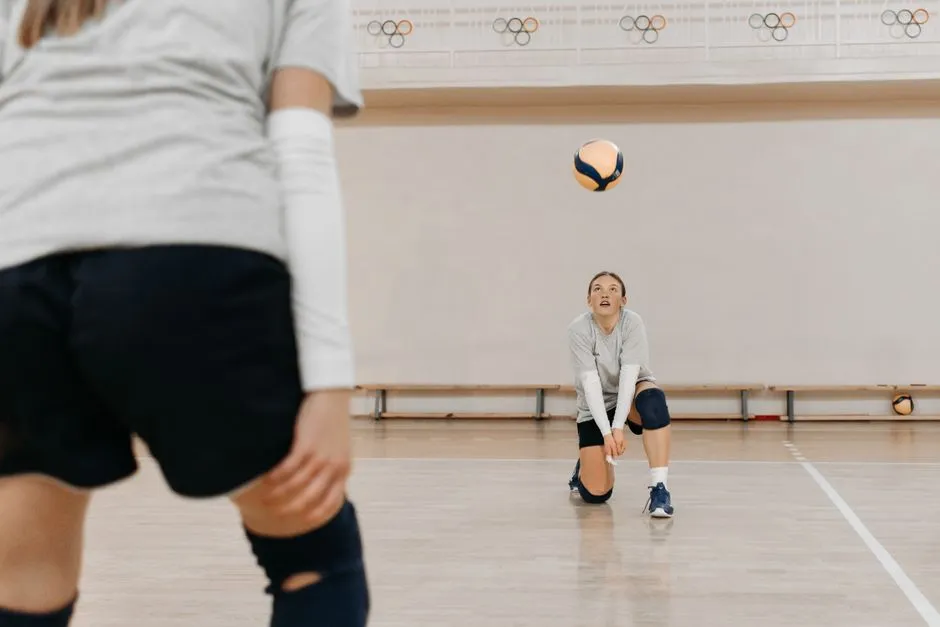
Set the platform angle before the ball arrives
A volleyball passing platform is the flat surface created by the inner forearms when the hands join and the elbows extend. For a controlled forearm pass, move behind the ball when possible, set that surface toward the target early, and keep it steady through contact. The ball follows the platform angle more than a large arm swing.
Technique will look different when a player is stretched or late. The priority is a playable ball, not a perfect pose.
Build one flat contact surface
Join the hands in a repeatable grip that allows the thumbs to sit beside each other, then straighten the elbows without locking the shoulders rigidly. Bring the forearms to a similar height so one arm does not redirect the ball unexpectedly.
Contact should generally occur on the forearms above the wrists, not on separated hands or near the elbows. Avoid interlacing fingers so tightly that a jammed ball could strain them. A coach can help choose a comfortable grip for the athlete.
Let the angle aim the pass
Imagine the platform as a rebound board. A surface facing too high can send the ball behind you; one facing too low can drive it forward and flat. Set the angle based on the incoming ball and desired arc rather than lifting at the last instant.
Keep the platform outside the torso enough to see the contact area. When the ball is centered, use the legs and body position to support the pass. When it is off-center, present the best available angle instead of swinging the arms sideways.
Move early, then become stable
Read the server, track the ball as soon as it leaves the hand, and use efficient steps to reach the contact line. Busy footwork that does not change position can leave the passer unbalanced. Arrive with enough stability to hold the platform angle.
Do not insist on stopping completely when the serve makes that impossible. The progression is read, move, balance when available, and create a useful surface. In a scramble, controlling the angle still matters.
Three passing problems to diagnose
| Ball result | Likely issue to check | Next cue |
|---|---|---|
| Pass sails behind the target | Platform opens too high or arms lift | Set the angle earlier and quiet the finish |
| Pass stays low and fast | Platform faces too flat or contact is late | Get behind the flight and offer more upward angle |
| Ball spins or shoots sideways | Uneven forearms or side swing | Match forearm height and hold the surface |
These are starting hypotheses, not automatic diagnoses. Ball speed, spin, and contact position also change the result. Use video or a qualified coach when the same miss persists.
Progress from a feed to serve receive
Begin with a partner toss that requires a small move. Pass to a visible target and hold the finish long enough to check the angle. Next, have the partner send easier balls over a net, then receive real serves from a manageable distance and pace.
Score the outcome rather than the appearance. One simple scale is: playable by the team, in the target area, or unplayable. As control improves, vary depth, direction, and serve type. A drill should eventually require the same reading and movement as a rally.
Pairing a passer with the serving-accuracy practice plan gives both athletes a clear target and realistic first-contact repetitions.
Protect the learning environment
Use adequate space, secure net systems, and balls appropriate for the group. Players should communicate about loose balls and stop a drill when another ball enters the landing or movement area. Build intensity gradually, and stop if passing causes pain, numbness, dizziness, or an injury concern.
Explore more cue-driven instruction in Skill Foundations.
Trust a prepared angle
Read early, move efficiently, create one even surface, and let that surface guide the ball. A calm platform does not mean passive play; it means the player did the aiming before the instant of contact.